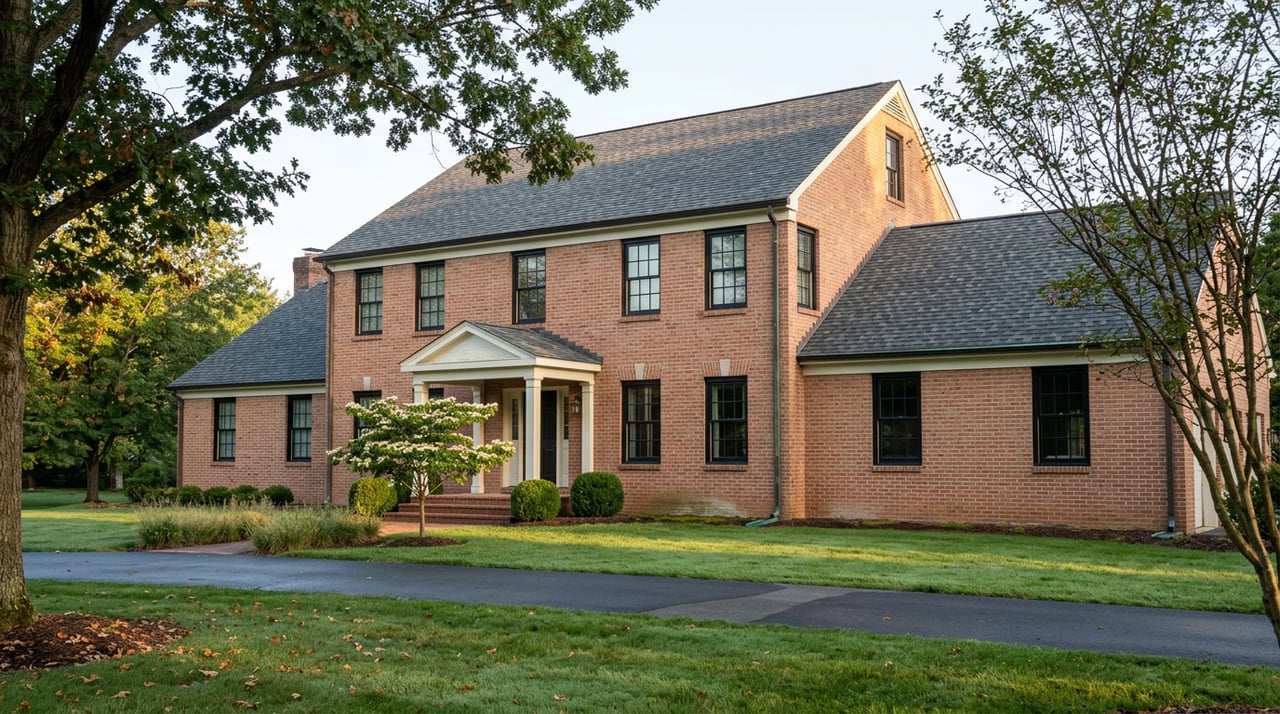
Pull up two real estate data sites at the same time and search the same zip code, and you will get two different pictures of Columbia Station, Ohio. One puts the typical home selling in about a month. The other, using its own September 2026 figures, puts the median time on market at 140 days, unchanged from a year earlier. Both are looking at the same 44028 zip code. Neither is wrong. They are just measuring different halves of the same market.
That gap is not a data error. It is the most honest thing either source says about Columbia Station. This is a Lorain County exurb where a turnkey ranch on public water and a custom colonial on ten acres of private well and septic can sit three doors down from each other and sell on completely different clocks. If you are comparing Columbia Station to a denser inner-ring suburb, the median price you see on a portal is telling you almost nothing about how long you will actually be under contract, because it is averaging together homes that do not belong in the same sentence.
What the median price is actually hiding
Depending on which source you check, the "median" home in Columbia Station this year has been priced anywhere from roughly $453,800 to $475,000, with per-square-foot figures landing in the $190s. None of those numbers are contradictory once you know what each one measures: one tracks active list prices, another tracks closed sales, another is an automated value estimate built from public records. They cluster in the same neighborhood of the mid-$400,000s, which is reassuring. What they don't cluster on is speed.
The wider county data tells the real story. Listings in the 44028 zip code have actually ranged from just under $120,000 to over $1.2 million within the same twelve-month stretch, with roughly 200 sales closing in that window. A statistic like "median days on market" collapses a starter ranch, a builder spec home, and a six-bedroom brick estate on two acres into a single number. That number is only useful if you already know which of those three homes you are buying.
The three markets hiding inside one zip code
Turnkey subdivisions on public utilities. These are the homes that move in three to four weeks. They sit on municipal water and sewer, they close like any suburban transaction, and they are what's dragging the fast end of the average down. A recently listed ranch here was marketed plainly as an investor or first-time buyer opportunity, with no systems to test beyond the usual home inspection.
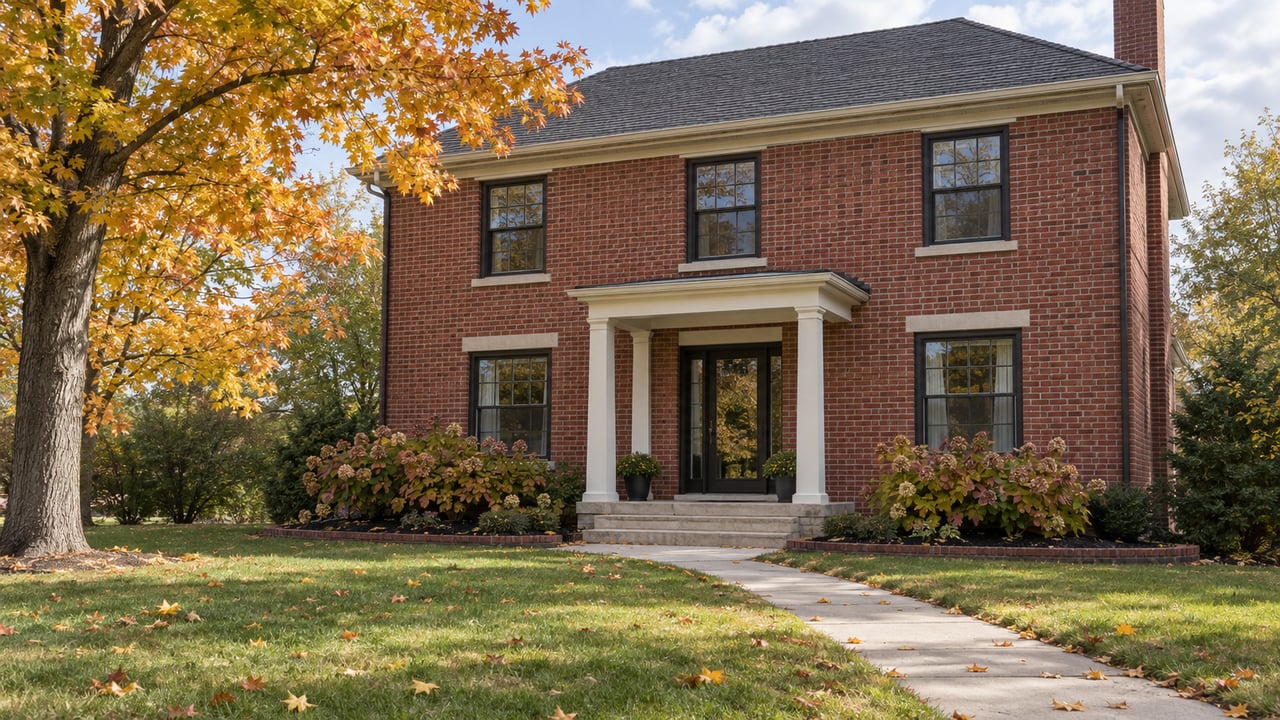
Custom and luxury acreage estates on well and septic. Castlebar Court, a six-home cul-de-sac subdivision built by Powermark Homes between 2001 and 2005, is a good example of what this segment looks like at the top end: two-story brick homes between 4,300 and 8,300 square feet, most running on private septic with public water. Homes at this scale, and the smaller acreage properties around them, come with a due-diligence step a public-utility home never needs: someone has to confirm the septic system and well actually work, and in Lorain County that confirmation is not automatic.
New construction still being built. Communities like Crossings at Emerald Woods sell homesites and to-be-built floor plans on their own construction calendar, sometimes closing in as little as 30 days if the home is finished, sometimes months out if it isn't. That timeline has nothing to do with septic or well and everything to do with a builder's schedule, but it adds another distinct clock to the same zip code's average.
Blend those three markets into a single median and you get a number that describes none of them accurately.
How septic due diligence can affect the slower half
Here is the mechanism that turns the acreage segment into a five-month sale instead of a five-week one. Supeck Septic reports that Ohio updated its septic system regulations in 2015, after nearly three decades without a review. Systems installed after July 1, 2021 fall under a stricter set of statewide standards, Ohio Administrative Code 3701-29, that require more rigorous soil evaluation before installation.
Some Northeast Ohio counties, like Summit, run a strict point-of-sale program: Summit County Public Health requires an inspection before transfer. Lorain County Public Health oversees more than 18,000 household sewage treatment systems across the county through its operation and maintenance program.
The inspection can still matter in practice. Buyers can ask for it, and sellers can have an answer ready.
That is the friction. A buyer moving from a city condo or an inner-ring suburb where every home sits on municipal sewer may not think to ask about septic history at all. A lender, on the other hand, often will. When that request comes late, or when a system is found to be failing, the fix is rarely a simple pump-and-go. According to Septic Cleanings, a failed septic system can require a full replacement and a new health department permit rather than a simple repair. That process, not buyer hesitation, is what stretches a Columbia Station acreage sale from weeks into months.
What to actually ask before you write an offer
If you are comparing a Columbia Station listing to something in a denser suburb, the median price and the median days-on-market figure are both less useful than five direct questions:
- Is this home on public water and sewer, or private well and septic?
- If septic: when was it last pumped, when was it installed, and is there a permit on file with Lorain County Public Health?
- If the system was installed after July 1, 2021, is there a current operation and maintenance contract in place?
- If the home needs a water tap extended to it, has anyone confirmed availability and cost with the Rural Lorain County Water Authority?
- If it's new construction, is this a finished spec home or a to-be-built floor plan, and what does that mean for your actual closing date?
None of these questions will show up in a portal's summary statistics. All five of them explain more about your real timeline than the median price ever will.
A quick side-by-side
| What you're comparing | Public water and sewer subdivision | Private well and septic acreage property |
|---|---|---|
| Typical time to close | Weeks | Can extend to months if inspection or repairs are needed |
| Who requires the inspection | Usually just the home inspection | Often buyer- or lender-initiated |
| Worst-case scenario | Standard repair negotiation | Full system replacement and new health department permit if the system fails under current code |
| Example in Columbia Station | Turnkey ranch or to-be-built spec home | Castlebar Court-style estate or acreage parcel |
FAQ
If a septic system fails an inspection, does that kill the sale? Not automatically, but it does slow things down. A minor mechanical issue, like a pump or aerator needing replacement, is usually a straightforward repair. A structural failure, like a saturated leach field or a collapsed tank, is the scenario most likely to add months to a closing.
Is a home on well and septic automatically a worse buy than one on public utilities? No. It simply carries a different due-diligence checklist. Many of Columbia Station's most established homes, including some of its larger custom builds, run on private systems that have been well maintained for decades. The point isn't to avoid these properties. It's to ask the right questions early enough that the answers don't surprise you three weeks before closing.
If you're weighing a move to Columbia Station against a denser Northeast Ohio suburb, the acreage, the privacy, and the price per square foot can be genuinely appealing. The part that catches people off guard isn't the home itself. It's assuming the timeline works the same way it would anywhere else. Robin Weidner has walked buyers through exactly this kind of well-and-septic due diligence across Lorain County, and can help you figure out which of Columbia Station's markets a specific listing actually belongs to before you write the offer. Let's Connect.
This article is general information, not legal, tax or financial advice. Consult a qualified professional about your situation.